American Goldfinch,
Spinus tristis
Facts and Information about
The Washington State Bird
The American Goldfinch and is commonly seen around the San Juan Islands. This sweet little bird, sometimes called the Willow Goldfinch, or Wild Canary, is a migratory bird that can be seen all across North America, in the northern regions during summer months and moving south during the colder, winter months when food is harder to find.
 Interestingly, human interaction has had a positive impact on goldfinch populations, due particularly to birdseed feeders. With the dependable winter food source, they will often stay north far longer into the winter months as survival is not dependent upon warmer climates to find seeds. They prefer fields and meadows, orchards and backyard garden areas, a preference that, unlike a majority of animal species, actually benefits by the deforestation surrounding our expanding human presence. American Goldfinches thrive in the open areas created by deforestation, areas composed mostly of grasses, weeds, and thistles,
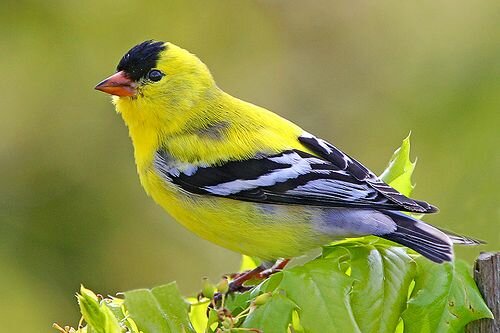 The photo above shows a male goldfinch, displaying the classic lemon coloring. Both male and female goldfinches molt twice a year, giving their plumage a distinctly different color depending on the season. The male goldfinch has a brilliant yellow color during spring and summer months. The fall molt sheds all the bright yellow feathers, making both male and female birds an olive-brown with a lighter underside. The spring molt sheds this darker, winter plumage, especially in the male, to reveal the familiar bright yellow coloring necessary to attract a mate. Female goldfinches are mostly brown, with a light yellow, almost greenish bib area, and closely resembles the male during winter months.
Washington state birds are small, about 5" long, and fly in what is known as a "roller coaster" pattern, sort of an undulating, bouncy path. They nest quite late in the summer, when their seed food source is at its peak.
Along with the American Goldfinch, get more bird facts and information for the following birds, commonly seen around the San Juan Islands. Click any of these photos or text links to open a new page for any bird.
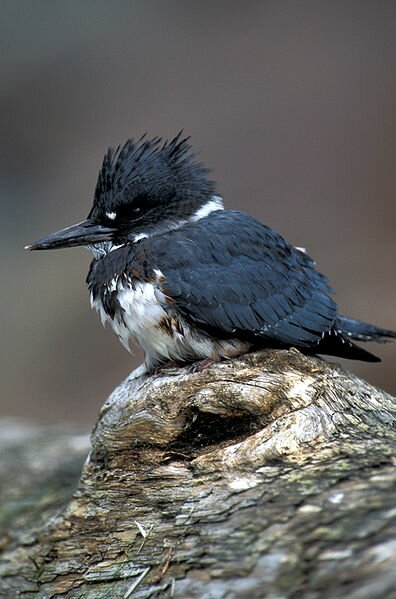


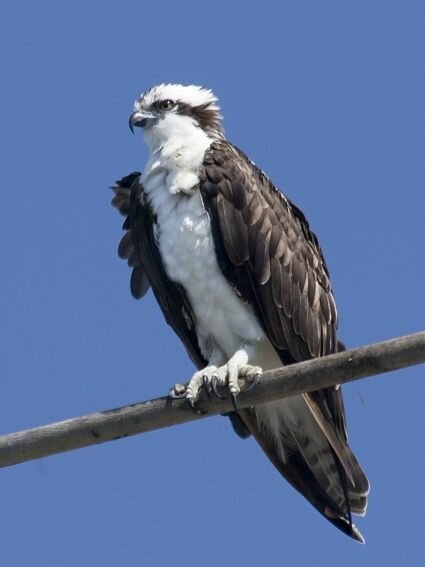


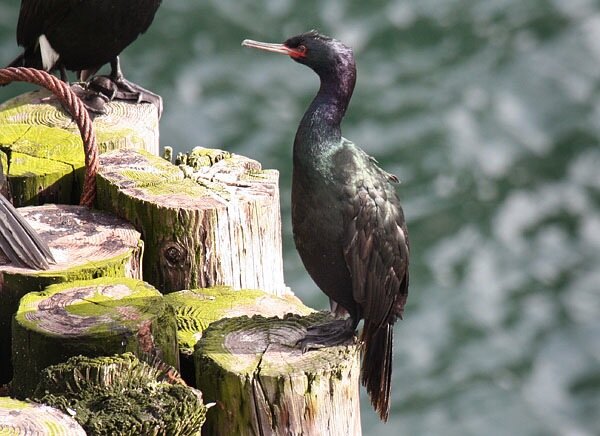


Print out these animal coloring pages for your kids or anyone who likes being creative.
Jump to see any of the Washington State birds: Red-winged Blackbird, Pelagic Cormorant, American Bald Eagle, Coopers Hawk, Red-tailed Hawk, Sea Hawk, Northern Goshawk, Great Blue Heron, Rufous Hummingbird, Belted Kingfisher, Common Raven, Trumpeter Swan, Yellow Rumped Warbler, Pileated Woodpecker, Great Horned Owl, Wild Turkey. Return to Simply San Juan from American Goldfinch.

SBI!
SBI!